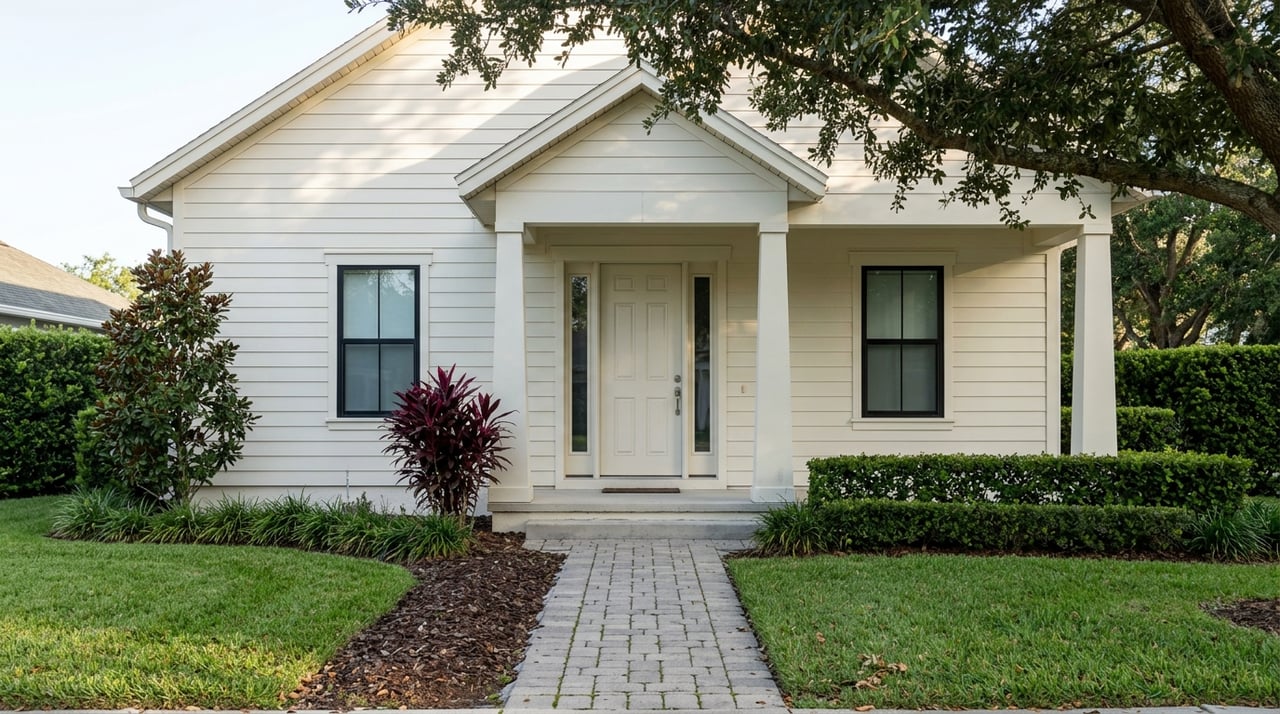
Picture two listings that land in your inbox the same Saturday morning. Both are three-bedroom homes in Leland, both priced within ten thousand dollars of each other, both built in the last decade. On paper they look like the same decision twice. Then you open the associated documents and one house carries annual HOA dues under $1,100. The other carries dues north of $8,000. Same town, same rough price point, a monthly gap wide enough to change what kind of mortgage you qualify for.
That gap is not a fluke. It is the actual organizing logic of Leland's real estate market, and it matters more to your monthly payment than the number on the sign.
The Price Tag Was Never the Full Story
Leland has grown into a collection of large, professionally managed communities, each built around a different amenity bet. Brunswick Forest, Compass Pointe, Waterford of the Carolinas, Magnolia Greens, and Mallory Creek Plantation all sit within a few miles of each other and all pull from the same pool of relocating buyers. But they are not selling the same product. They are selling different amounts of shared infrastructure, and the HOA fee is simply the invoice for how much of that infrastructure you signed up to fund.
At the low end, Mallory Creek Plantation's neighborhood associations commonly run somewhere around $1,020 a year. That buys two pools, clubhouse space, sidewalks, trails, and stocked catch-and-release ponds. It does not buy a golf course, a lazy river, or a staffed wellness center, because none of those things exist inside the community to maintain.
At the other end, a single-family home in Compass Pointe can carry dues north of $8,000 a year, and Brunswick Forest townhome sections like Cypress Point have listed with dues near $8,700. In both cases the number is high because it is doing double duty. In Compass Pointe, that fee typically funds gated security, the Grand Lanai resort pool complex, an indoor pool, a lazy river, tennis and pickleball courts, master insurance and full landscaping. In Brunswick Forest's higher-dues townhome sections, the fee often bundles in the master insurance policy for the building itself, which is why a townhome's dues can run two or three times higher than a detached house a few streets over even though both sit inside the same master community.
That is the mechanism worth understanding before you tour a single model home: the dues figure is not a fee for owning the house. It is a fee for the amenities and if a townhome is involved it will included the shared liability and maintance attached to that specific property in the specific community.
What Each Fee Tier Is Actually Funding
Once you separate dues from price, the communities start to look less like a price ladder and more like five different answers to the question of how you want to spend a Tuesday afternoon.
Brunswick Forest built its identity around an 18,000-square-foot Fitness & Wellness Center with indoor and outdoor saltwater pools, tennis and pickleball courts, a fishing pond, and roughly 50 miles of connected walking and biking trails, all accessible without a mandatory membership. Golf is the one carved-out exception. Cape Fear National, the community's 18-hole course, requires a separate optional membership on top of standard dues. Typical single-family dues cluster in the $1,600 to $3,400 range, with townhome sections that bundle in insurance and exterior maintenance running considerably higher.
Compass Pointe leans harder into resort programming. The community's Grand Lanai clubhouse anchors an outdoor lazy river, indoor and outdoor pools, a wellness center, and a private 18-hole course that again sits outside standard dues as an optional club membership. Listed dues here range from roughly $3,000 on the low end to more than $8,000 depending on section and whether lawn care and exterior maintenance are bundled in.
Waterford of the Carolinas sells a different lifestyle entirely. Its identity is water, not wellness: 17 miles of controlled freshwater waterways, Osprey Lake, a kayak launch, and a sandy beach area, with retail and medical offices close enough to reach by golf cart. Buyers here are usually prioritizing paddling and lake views over a fitness studio. The community also features a pool, clubhouse and small fitness room.
Magnolia Greens, one of Leland's older golf communities, offers a public 27-hole course, mature landscaping, and an 8,800-square-foot recreation center, generally at the most affordable dues tier among the area's larger amenity communities. Some sections do include landscaping and yard maintenance, so your annual dues will be closer to $2400 per year.
Mallory Creek Plantation skips the resort-scale build entirely. Its dues fund neighborhood-level amenities rather than a town center, which is exactly why the number stays low. If your goal is more house for the same monthly payment and you are not planning to use a lazy river, this tier is worth a serious look. The same logic applies to Leland's newer, less amenity-dense construction like Grayson Park, where lower dues reflect a smaller shared infrastructure footprint rather than a lesser build.
Community | Typical annual HOA dues | What the fee is funding |
|---|---|---|
Mallory Creek Plantation | roughly $1,020 | pools, clubhouse space, trails, stocked ponds |
Magnolia Greens | most affordable of the larger communities starting at $790 | 27-hole public golf course, mature grounds, rec center, tennis, pickleball, |
Waterford of the Carolinas | mid-range, varies by section $1687 to $6500 for townhomes | freshwater canals, Osprey Lake, kayak launch |
Brunswick Forest | roughly $1,600 to $3,400 typical; townhome sections run higher | Fitness & Wellness Center, trails, pools, tennis, pickleball, optional golf |
Compass Pointe | roughly $3,000 to $8,000+ depending on section | Grand Lanai resort pool, lazy river, fitness, gated security, optional golf |
The Second Number Buyers Skip Past
Dues are the headline, but they are not the only carrying cost that differs by address in Leland. Since July 1, 2026, the Town of Leland's municipal property tax rate has been 25 cents per $100 of assessed value, a 7.4 percent cut from the prior 27-cent rate that Town Council approved in its fiscal year 2026-2027 budget. Brunswick County's separate countywide rate was set at 34.20 cents per $100 for the fiscal year that closed this past June, with the next scheduled property reappraisal set for January 1, 2027.
On a $500,000 assessed home, that town-side rate cut saves a homeowner roughly $100 a year. It is a real number, but stack it against the HOA gap you just read about and the point sharpens: the difference between Mallory Creek's dues and Compass Pointe's dues can be many times larger than the entire municipal tax cut. If you are comparing a home just inside Leland's town limits against one just outside it, the property tax line is worth checking. If you are comparing two communities with different amenity packages, the dues structure is where the real money moves.
Why This Keeps Changing, Not Just Existing
Brunswick Forest is not standing still while you tour it. The community has opened a second amenity hub, the Reflections Amenity Center, a resort-style zero-entry saltwater pool and fitness facility built to serve newer southern-section neighborhoods like Osprey Landing and Creek Side without crowding the original Fitness & Wellness Center. Trestle Ridge, another new enclave, has been positioned as one of the community's primary price-point releases through 2026. None of that construction is free, and dues in newer sections often reflect the cost of building out amenities that established sections already paid off years ago. If you are shopping new construction inside an existing master-planned community, ask specifically whether the section you are considering is funding a brand-new amenity or simply maintaining one that already exists. The answer changes what you should expect dues to do over the next five years.
What to Ask For Before You Write an Offer
A listing sheet will show you a dues number. It will not show you what that number is protecting you from or committing you to. Before you get attached to a specific address, request:
- The current HOA budget and reserve study for that specific sub-association, not just the master community
- Whether the fee includes lawn care, exterior maintenance, or master insurance, since bundled townhome fees can look alarming until you subtract what you would otherwise pay separately
- Any pending special assessments or capital projects tied to new amenity construction
- The exact boundary of what golf, club, or wellness memberships cost on top of standard dues, since most of Leland's larger communities treat golf as optional and separately priced
A Few Direct Answers
Does a lower HOA fee always mean a better deal? Not automatically. A lower fee usually means less shared infrastructure to use, not just less to pay for. The right comparison is cost against actual use, not cost alone.
Will Leland's tax rate cut meaningfully lower my payment? On its own, modestly. The July 2026 rate cut saves roughly $100 a year on a $500,000 assessed home. It is worth factoring in, but it will not offset a jump from a low-dues community to a resort-fee one.
How do I know what a specific home's dues really cover? Ask for the current budget before you write an offer, not after. Dues language varies by sub-association even within the same master community, and the only way to know what you are actually buying is to read the document tied to that address.
If you are weighing Leland's communities against each other and want someone to pull the actual budgets and dues schedules before you tour, Kristin Freeman and the team at Thirty4 North Properties Group know these communities section by section. Contact us and we will help you compare the real monthly number, not just the one on the sign.
This article is general information, not legal, tax or financial advice. Consult a qualified professional about your situation.