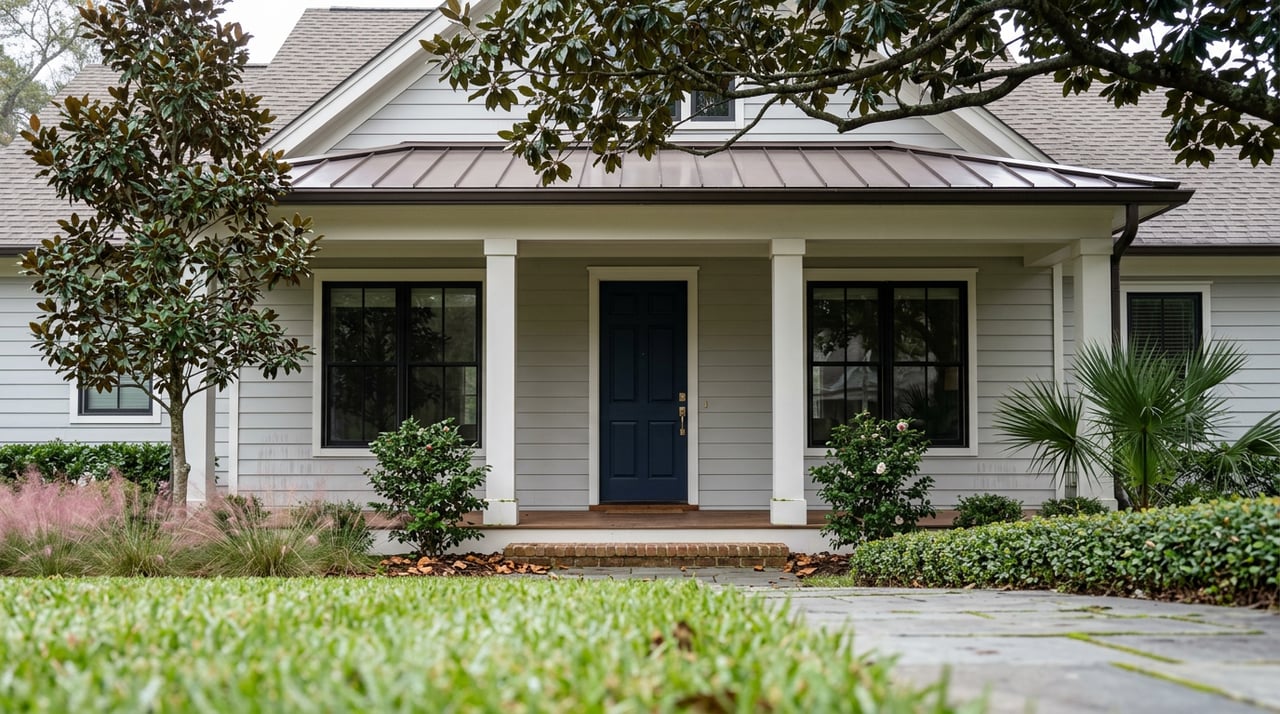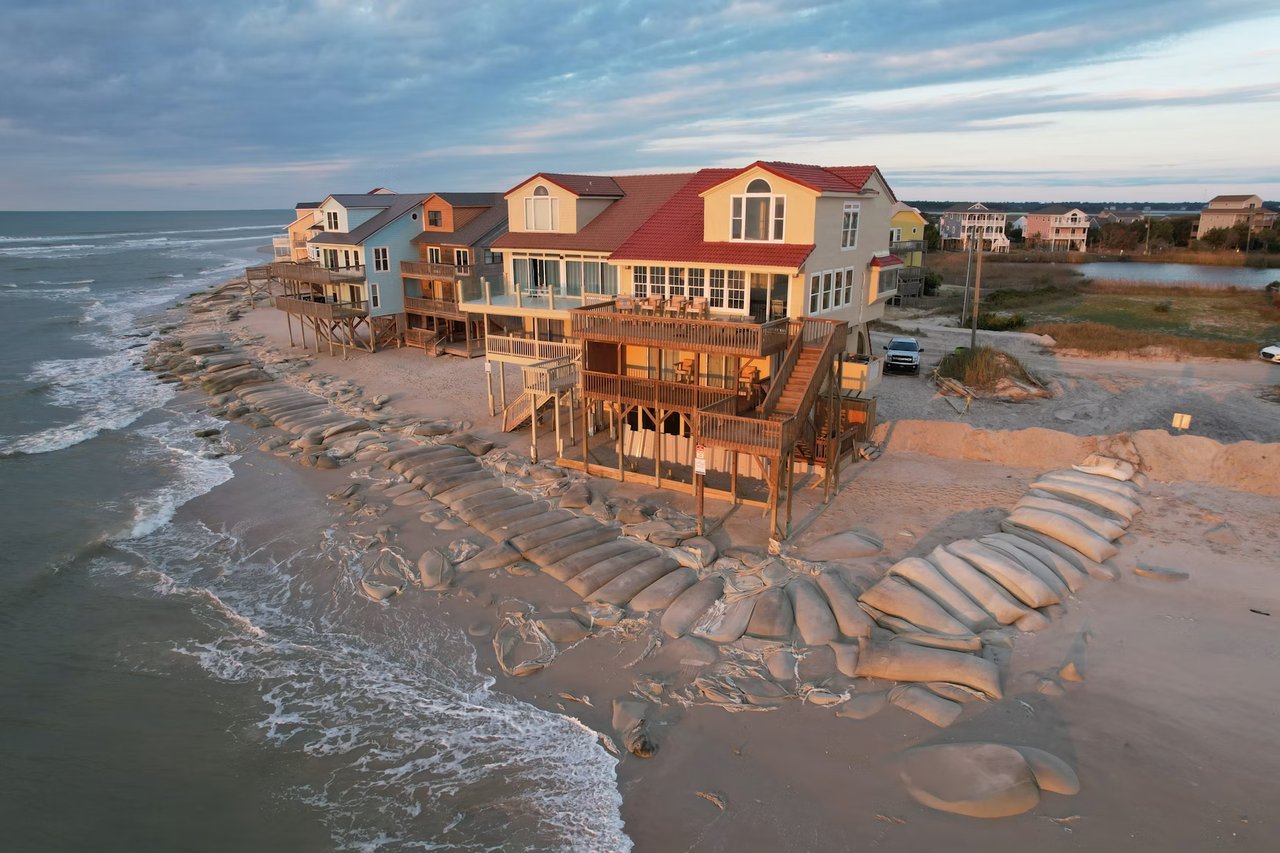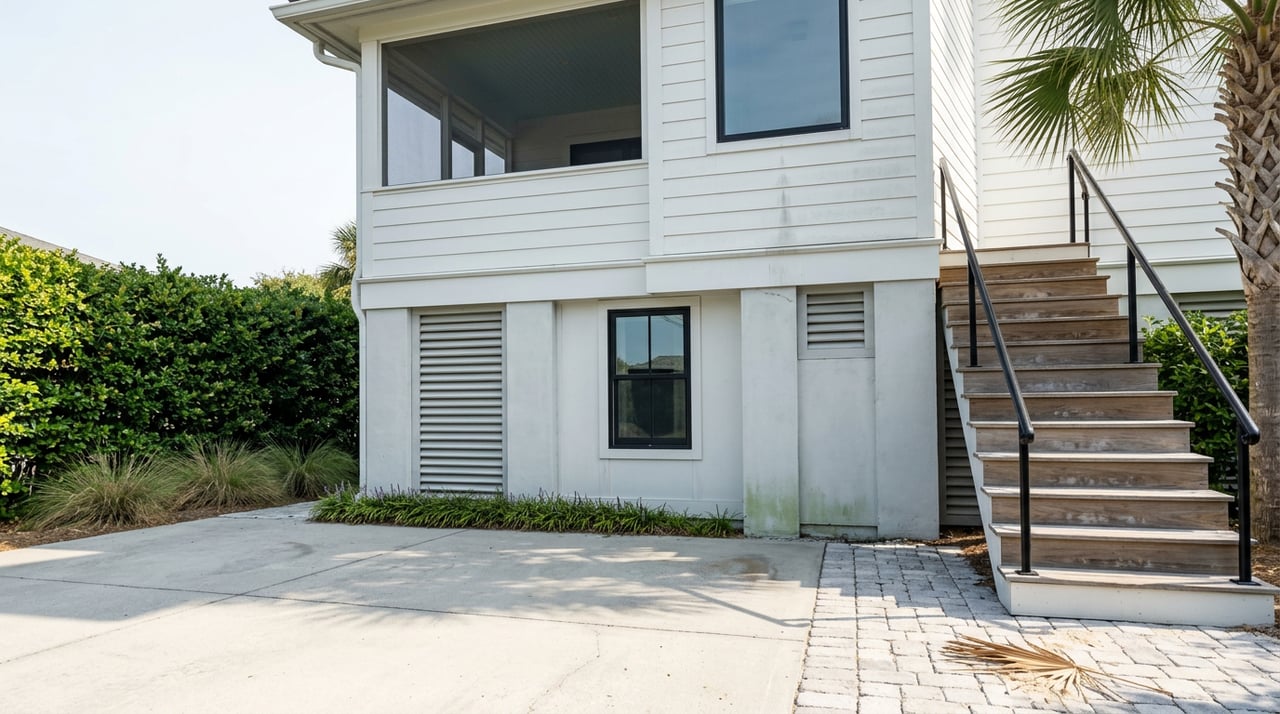
Picture two homes on the same street in Wrightsville Beach, built within a few years of each other, both a short walk from Banks Channel. A buyer touring each one might reasonably expect similar flood insurance costs. In practice, one homeowner's premium can run close to $1,200 a year while the other's lands near $4,000 or more, on houses that look almost interchangeable from the street. The difference rarely comes down to the house. It comes down to paperwork, timing, and a federal pricing system that now treats every address as its own case file.
That distinction matters more this year than most, because the program behind nearly every flood policy on the island is running on a deadline.
The Zone Sets the Requirement. The Address Sets the Price.
The Town of Wrightsville Beach is direct about this on its own site: every property within town limits sits inside a designated flood hazard area. That single fact used to tell you almost everything about your insurance bill. It no longer does.
Since FEMA rolled out its Risk Rating 2.0 pricing model, flood insurance is no longer priced by zone alone. The system now calculates a premium for each individual property based on its elevation relative to the base flood elevation, its distance from the water, its structure type, the year it was built, the coverage limits requested, and its prior claims history. Two houses in the same flood zone, on the same block, can carry very different numbers once those variables are run.
For context on the range involved, general flood insurance premiums across North Carolina typically fall between $600 and $3,500 a year, while coastal high-hazard V and VE zones near Wrightsville Beach and the Outer Banks often run $3,000 to $5,000 or more annually. Those bands are wide enough that guessing a number off a flood map is no longer a safe habit for either side of a transaction.
Flood zone type | Typical annual premium |
|---|---|
General North Carolina range | $600 – $3,500+ |
V/VE coastal high-hazard zones near Wrightsville Beach | $3,000 – $5,000+ |
An address-specific quote, run before an offer is written or a listing goes live, is the only number worth planning around.
The Paperwork Move Most Buyers Never Ask About
Here is the part of the process that rarely comes up until someone asks the right question at the right time. A seller's existing NFIP flood policy does not have to be canceled and replaced when a home changes hands. It can be assumed.
The National Association of Realtors' own guidance on this point is worth reading in full because it removes the ambiguity: insurers may assign the seller's NFIP policy to the buyer simply by substituting names, so coverage on the property is maintained and a new policy does not need to be issued.
That single mechanism can be the difference between inheriting a seller's older, lower premium and its associated rate protections, or starting fresh at full Risk Rating 2.0 pricing on day one. If a seller has held their policy for years, that older rate and its gradual increase schedule can transfer with the property instead of resetting. On a barrier island where premiums for similar homes already diverge by thousands of dollars, this is not a minor detail buried in a closing packet. It is a line item worth raising with your agent and your insurance carrier before you are down to the final week of your due diligence period.
The Deadline Sitting Under This Fall's Closings
There is a second, more urgent reason to have this conversation now rather than later.
FEMA states plainly that Congress must reauthorize the National Flood Insurance Program by 11:59 p.m. on September 30, 2026, or its authority to issue new or renewed flood policies expires. From today, that is roughly seven weeks away.
This is not a hypothetical concern. Congressional Research Service data shows that during a prior NFIP lapse in June 2010, over 1,400 home sale closings were canceled or delayed each day nationwide, representing more than 40,000 sales a month, because lenders could not close federally backed mortgages on properties in flood hazard areas without an active policy in force. In a market like Wrightsville Beach, where every property sits inside a Special Flood Hazard Area, a lapse of any length would touch nearly every pending transaction on the island.
Congress has reauthorized the program before each of these deadlines in recent years, often at the last moment, so a lapse is not a certainty. But anyone with a closing scheduled near or after September 30 is now planning around a date that is genuinely on the calendar, not a distant policy debate.
If your transaction falls in this window, a few steps are worth taking well ahead of the deadline:
- Ask your insurance agent to bind your flood policy application as early as possible rather than waiting until the final days before closing.
- If you are buying, ask specifically whether the seller's existing NFIP policy is eligible to be assumed rather than replaced.
- Confirm with your lender how a program lapse, should one occur, would affect the closing timeline on a federally backed loan.
- Keep your closing attorney looped in on insurance status, since North Carolina closings are attorney-supervised and timing coordination runs through that office.
The One Stretch of Beach With Its Own Rulebook
Insurance is not the only place where Wrightsville Beach adds a layer most buyers do not expect. If you are considering a renovation or rebuild, particularly on an oceanfront lot, one stretch of the island carries a rule that only applies here.
For oceanfront property between Masonboro Inlet and Heron Street, the town's regulations reference a 1939 property line that can define the eastern boundary of the lot and the setbacks allowed for new construction. Where that applies, the more restrictive of the town's zoning setback or the state's CAMA setback governs what can actually be built, which can shrink the usable footprint of a lot more than a buyer expects when comparing it to a similar property just outside that stretch.
A few other rules shape what is possible on these lots. Maximum residential height on the island is capped at 40 feet, measured from the centerline of the street. If a project sits in an Area of Environmental Concern and disturbs more than 200 square feet, a CAMA minor development permit is typically required, and state guidance calls for those minor permits to be issued within 25 days once a complete application is received. And under the substantial improvement and substantial damage rule that governs floodplain construction, a project is generally treated as a rebuild once repair or improvement costs reach half the structure's assessed or appraised value, which changes what is realistically allowed after storm damage.
None of this makes an oceanfront purchase a bad decision. It does mean the due diligence period on these specific lots deserves a conversation with the town's planning office before design work goes very far, not after.
If You're the One Selling
Most of this conversation gets framed around buyers, but sellers on Wrightsville Beach are sitting on something worth pointing out directly. If your flood policy has been in place for several years, particularly if it predates the shift to Risk Rating 2.0 pricing, that policy's rate and its transfer eligibility can become part of your listing's value story. A buyer comparing your home to a similar one down the street is going to notice if one comes with an assumable policy at a known, lower rate and the other requires a fresh quote at full pricing. In a market where premiums already vary by thousands of dollars between nearly identical homes, that is a real, quantifiable difference, not a marketing flourish.
A Few Direct Answers
Does every home in Wrightsville Beach require flood insurance? All properties within Wrightsville Beach's corporate limits sit in a Special Flood Hazard Area. Flood insurance is mandatory with a federally backed mortgage on properties in high-risk zones, and even outside that requirement, standard homeowners policies exclude flood damage entirely.
Can I still get an NFIP policy if the program lapses before my closing? Existing policies remain in force through their term even during a lapse, but FEMA cannot issue new or renewed policies while its authority is expired. That is exactly why binding a policy early, well before a scheduled closing near the deadline, matters this year.
Who handles the actual closing on a Wrightsville Beach purchase? North Carolina requires an attorney-supervised closing rather than a title company closing, so a licensed attorney coordinates the title work and the settlement itself.
Is an assumed flood policy always cheaper than a new one? Not automatically, but it is worth checking every time. A policy that predates Risk Rating 2.0 or that has an established claims history can carry a lower starting rate and a gentler path of future increases than a brand new policy priced fresh on today's system.
Flood insurance on Wrightsville Beach is not a box to check once and forget. It is a live number that shifts by address, by paperwork, and this year, by a date on the federal calendar. If you are weighing a purchase, a sale, or a renovation on the island and want someone to walk through what your specific address and timeline actually mean, Kristin and Matt Freeman and the Thirty4 North Properties Group team can help you sort through it before it becomes a closing week surprise. Contact us.